Roof washing
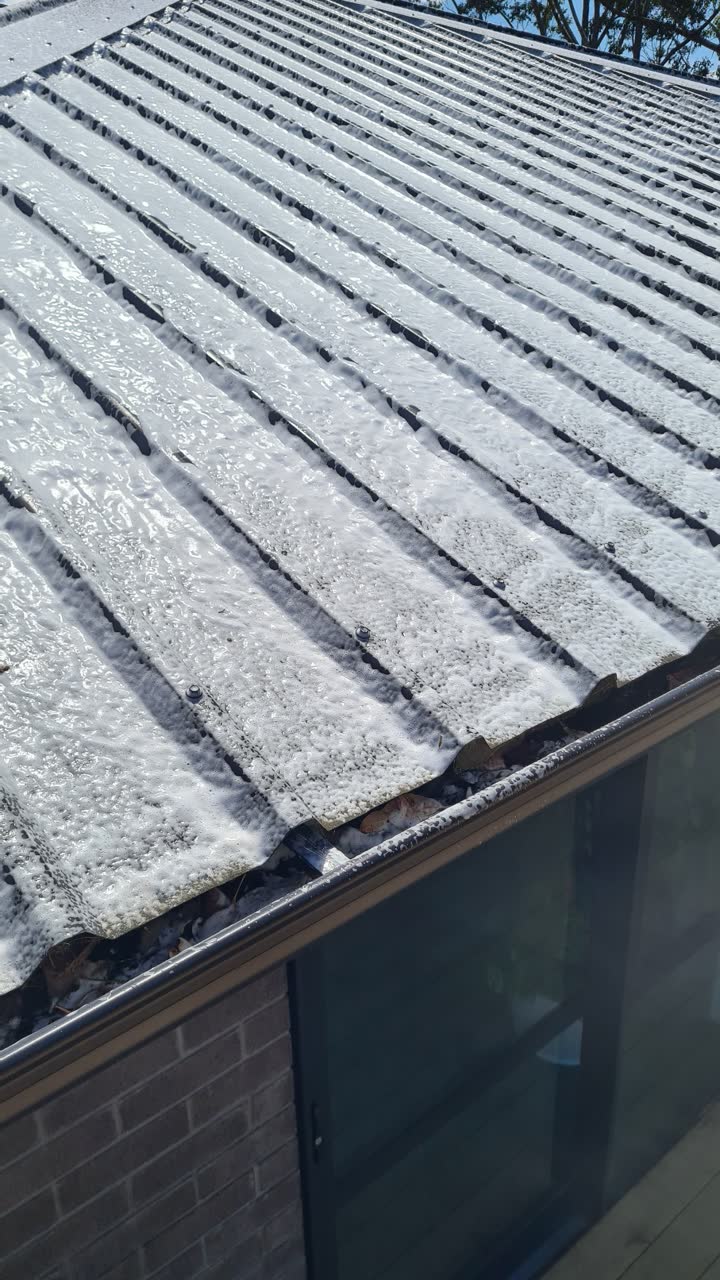
The short answer: There are two ways to get rid of moss and mould on a roof, and they're different options — not one job. A roof wash (a soft wash — never a water blast, which damages the roof) cleans it straight away but uses more water. A roof treatment is sprayed on and left to kill the growth using very little water, and it's cheaper — the moss dies off and weathers away on its own, taking up to 12 months to fully clear. Washing gives an instant result; treatment is lower-water, more affordable and longer-lasting.
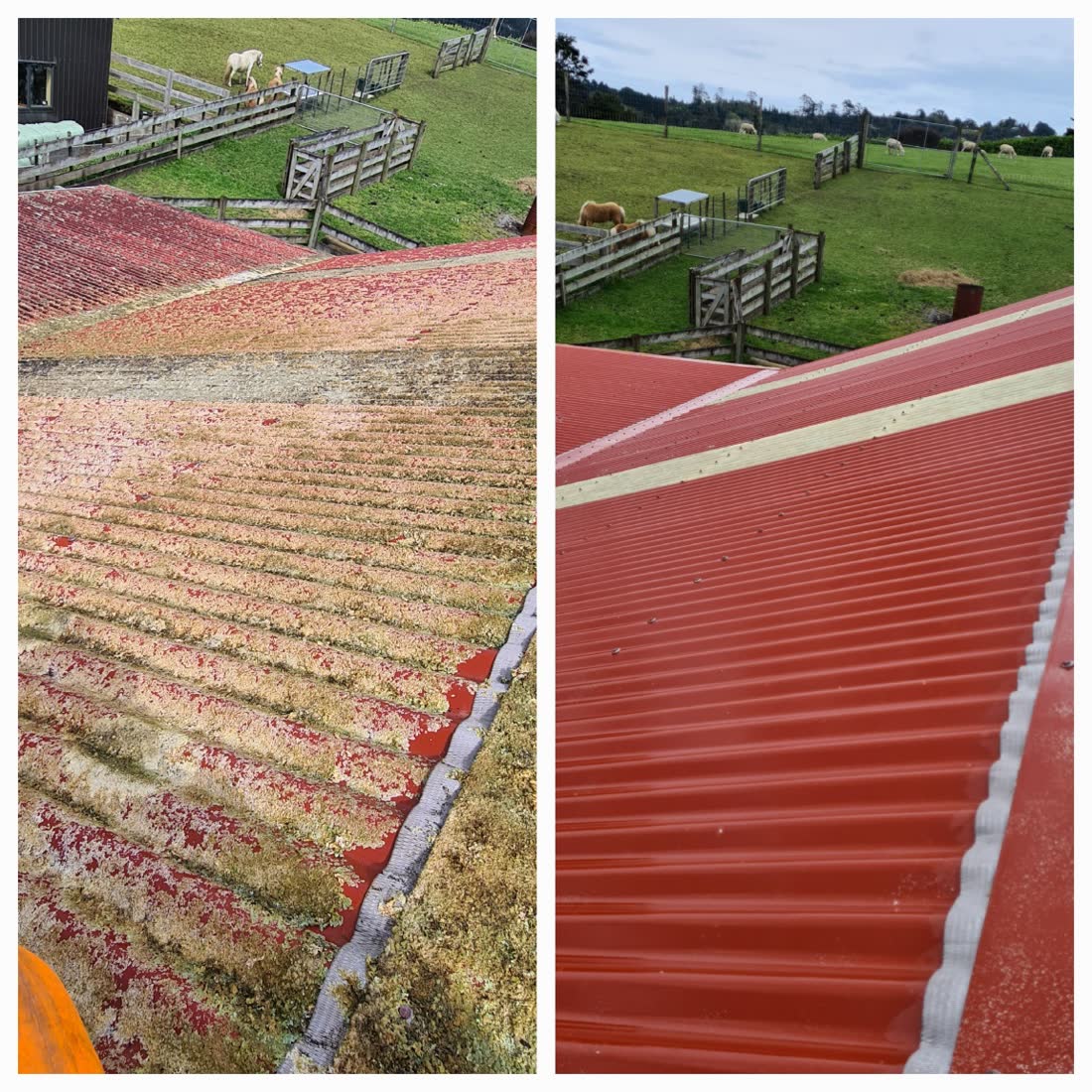
Moss, mould and lichen on a roof isn't just an eyesore — left alone it holds moisture against the surface, works into the joins and lifts and cracks tiles, quietly shortening the life of your roof. The good news is it's very fixable, as long as it's done the right way. Here's how it works.
Why roofs go mossy in Auckland
Auckland's warm, damp, humid climate is ideal for roof growth, and roofs cop the worst of it — they stay wet longest and often sit in shade. It takes hold fastest on:
- South-facing roof faces that get little sun
- Roofs shaded by trees, or with leaf litter sitting on them
- Older, more porous tiles and textured surfaces that hold moisture
Don't water blast your roof
It's tempting to blast moss straight off, and plenty of people do — but it's the fastest way to wreck a roof. High-pressure water blasting can lift and crack tiles, strip the protective granules off Decramastic and metal roofs (leaving them to rust and fade far sooner), and force water underneath where it causes leaks. It also only removes what's on the surface — the moss grows straight back. Roofs should always be soft washed, never blasted.
Two options: roof washing or roof treatment
There are two ways to deal with a mossy roof, and they're not the same job — they're different options with different trade-offs. Which one suits you comes down to how fast you want a result, how much water is used, and how long it lasts.
Roof washing (soft wash)
A soft wash physically cleans the roof — low pressure paired with a solution that kills the moss, mould and lichen, then a gentle rinse. You get an immediate, visible result: the roof looks clean the same day. It uses more water, and because the growth is killed at the root it doesn't bounce straight back the way a quick blast does.
Best when you want the roof clean and clear right now — for example before selling or painting.
Roof treatment (spray-on)
A roof treatment is sprayed on and left to work — no washing, no rinsing. It uses very little water, and instead of an instant clean the moss and mould die off and gradually weather away by themselves with the wind and rain. It's the slow burn: it can take up to 12 months to fully show its results, but it's gentler on the roof and keeps working the whole time.
It's also usually the more affordable option — there's less water, gear and labour involved than a full soft wash.
Best when you're not in a rush for a spotless look, want the least water and disruption, want to keep the cost down, and want long-lasting, low-fuss control.
Which should you choose?
- Speed of results — washing is instant; a treatment takes up to 12 months to fully show.
- Water used — washing uses more; treatment uses very little.
- Cost — a treatment is generally more affordable; a full wash costs more.
- How long it lasts — treatment keeps working and lasts longer; a wash is a clean at one point in time.
Not sure which is right for your roof? Tell us what you're after and Spray Away will give you the honest recommendation.
How often should you do it?
Most Auckland roofs benefit from a wash or a treatment every 1–3 years. Shaded, tree-covered or south-facing roofs grow moss faster and sit at the shorter end; sunnier, more exposed roofs last longer. Keeping on top of it is far cheaper than the re-roof that heavy moss build-up eventually leads to.
Frequently asked questions
How do you get rid of moss and mould on a roof?
Two ways, depending on what you want. A roof wash (soft wash, never a water blast) cleans it straight away using more water; a roof treatment is sprayed on and left to kill the growth using very little water and at a lower cost, with the moss weathering away on its own over the following months — up to a year to fully clear. Both kill the moss at the root rather than just scraping the surface.
Should you water blast a mossy roof?
No. High-pressure water blasting can lift and crack tiles, strip the protective granules off Decramastic and metal roofs, force water underneath and shorten the roof's life. Roofs should be soft washed, never water blasted.
What's the difference between roof washing and roof treatment?
They're two different options. Roof washing is a soft wash that cleans the roof straight away for an immediate result, but uses more water and costs more. A roof treatment is sprayed on and left — it uses very little water, is more affordable, and the moss and mould die off and weather away on their own (up to 12 months to fully clear) rather than being washed off now. Treatment is slower to show but gentler and longer-lasting.
How long does roof moss treatment take to work?
With a roof treatment, results are gradual — it can take up to 12 months to fully show, as the moss dies off and weathers away with the rain and wind rather than being scraped or washed off. If you want an instant result instead, a soft wash cleans the roof the same day.
How often should you treat a roof for moss in Auckland?
Most Auckland roofs benefit from a wash or a treatment every one to three years, depending on how shaded and damp the roof is. Shaded, tree-covered or south-facing roofs grow moss faster and are at the shorter end of that range.
Got moss creeping across your roof?
Spray Away will sort it the right way — a soft wash or a treatment, whichever suits your roof and budget — no blasting, no damage. Free quotes across the Rodney District, West Auckland and the North Shore.
Get a free quote