
Methods
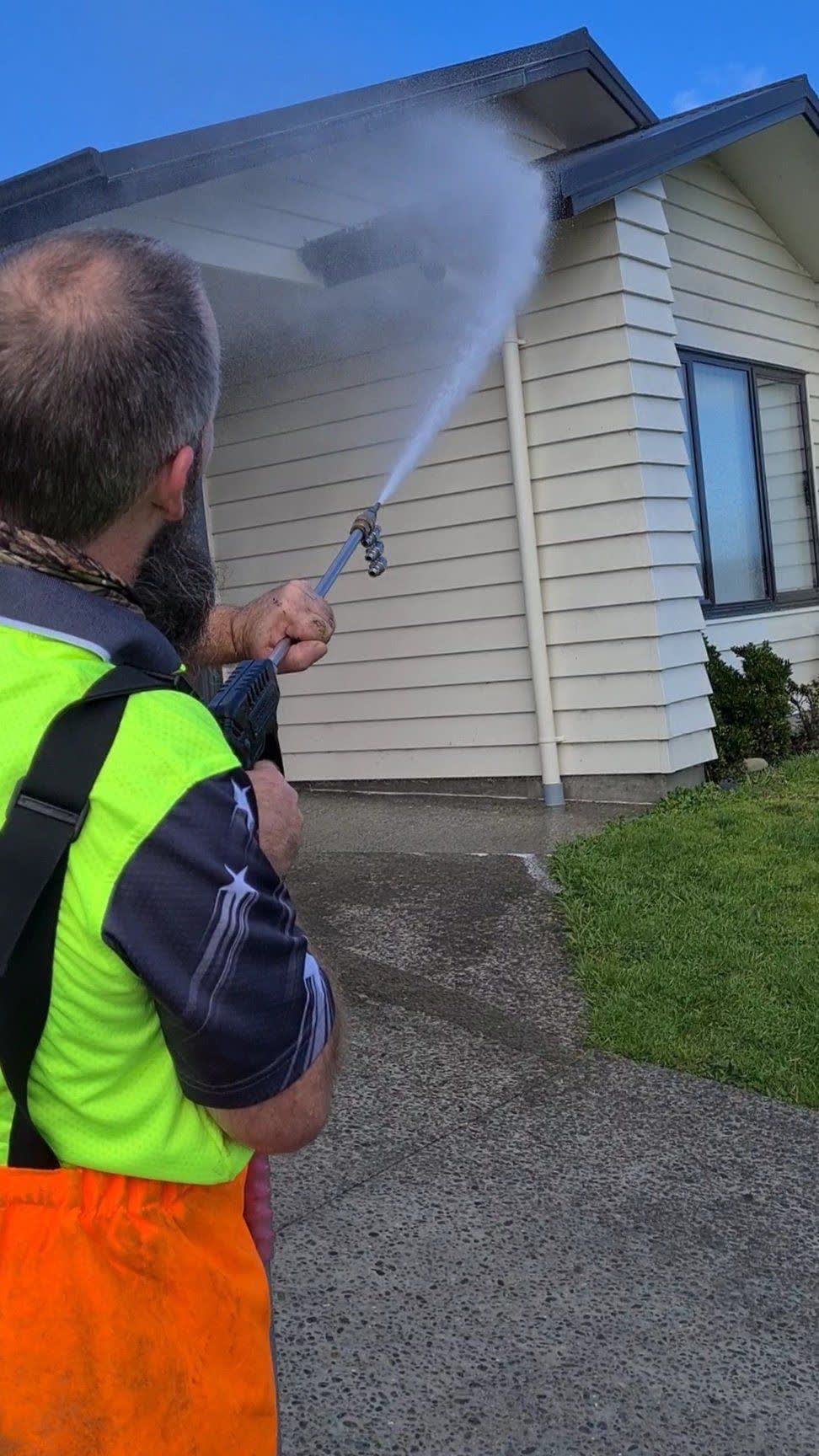
The short answer: Soft washing uses low pressure and a specialised cleaning solution to kill and remove mould, moss and algae at the root — safe for almost every surface on your house. Water blasting uses high-pressure water to strip heavy grime off hard surfaces like concrete. The rule of thumb: soft wash anything on your house, water blast the ground.
"Water blasting" and "house washing" get used as if they're the same thing, but they're two different jobs — and picking the wrong one is how roofs get damaged and paint gets stripped. Here's the plain-English difference, and how to know which your place needs.
What is soft washing?
Soft washing cleans using a biodegradable cleaning solution applied at low pressure — roughly the force of a garden hose. The solution does the work: it kills the mould, moss, lichen and algae rather than just blasting the surface layer off. A gentle rinse then washes it all away.
Worth clearing up a common myth: soft washing doesn't mean a completely different machine. The same pressure washer can be dialled right down by fitting a wider, low-pressure nozzle (or a dedicated soft-wash setup), so one machine covers everything from a gentle rinse to high pressure. It's the nozzle and technique that make it soft, not a separate tool — which is exactly why an experienced operator matters more than the gear.
Because there's no high pressure involved, soft washing is safe for the surfaces most of your home is made of:
- Roofs — tile, metal, Decramastic and Colorsteel
- Weatherboard, plaster, brick and fibre-cement cladding
- Painted surfaces, joinery and fascia
- Fences and timber
The big advantage: because it kills the growth at the root, the surface stays clean far longer than a plain blast — usually a year or more.
What is water blasting?
Water blasting (also called pressure washing) uses high-pressure water to physically blast dirt, grime and stains off a surface. On its own it relies on pressure rather than a cleaning solution, which makes it excellent for hard, durable surfaces that can take the force:
- Concrete driveways, paths and patios
- Pavers and tiled outdoor areas
- Retaining walls and hard standing
The catch is that the same pressure that shifts grime off concrete will happily strip paint, etch timber, crack roof tiles and force water in behind your cladding.
How Spray Away pressure washes — pre-treat, wash, then protect
On surface cleaning, Spray Away does a bit of both — chemistry and pressure working together, not just a pressure wash and away:
- Pre-treat — Spray Away applies a cleaning solution first to kill and lift the moss, mould and lichen, so the pressure washing removes it cleanly and evenly rather than just skimming the top.
- Pressure wash — Spray Away then pressure washes the loosened growth and grime off.
- Post-treat — finally a protective treatment is applied that leaves a barrier on the surface, slowing regrowth so your driveway or paths stay clean for longer.
That's the difference between a quick pressure wash that greens up again within months and a proper clean that lasts.
It also changes how you keep it up. Once a surface like a driveway, path or patio has been cleaned and treated, it doesn't need a hard pressure wash every time. A lighter maintenance treatment — reapplying the solution to kill new growth as it appears — keeps it looking good with far less wear on the concrete than blasting it over and over.
Why using the wrong one causes damage
This is where DIY jobs and cheap operators go wrong. Point a high-pressure blaster at the wrong surface and you can:
- Wreck your roof — high pressure lifts tiles, cracks them, and strips the protective granules off Decramastic and metal roofs, shortening their life.
- Force water inside — pressure drives water behind weatherboards and cladding joints, where it causes damp and rot.
- Strip paint and etch timber — leaving a patchy, furred finish that then needs repainting.
That's why we soft wash everything on the house and only reach for high pressure on hard ground surfaces.
Never water blast a timber deck — and never clean one with sodium hypochlorite (bleach), either. High pressure tears up the soft grain and leaves it furry and splintered; bleach dries out and greys the timber and raises the grain. Both leave you with a deck that needs sanding to put right. Decks get our bleach-free timber wash instead, which lifts the grime and restores the wood rather than damaging it. High pressure is also a no on roofs, painted weatherboards and plaster cladding — anything soft or coated should be soft washed, not blasted.
Before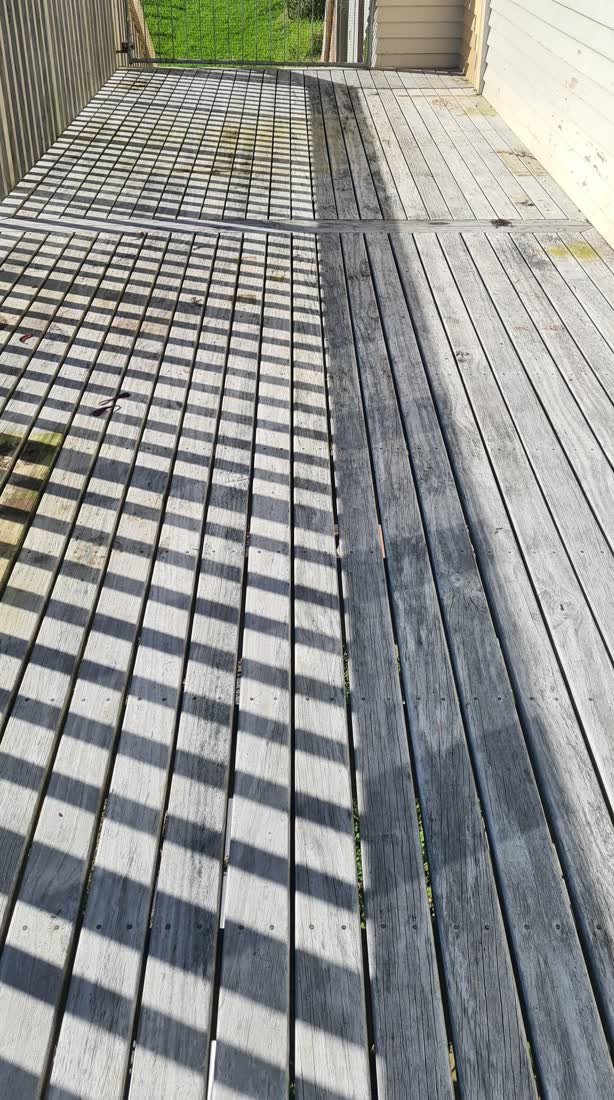
After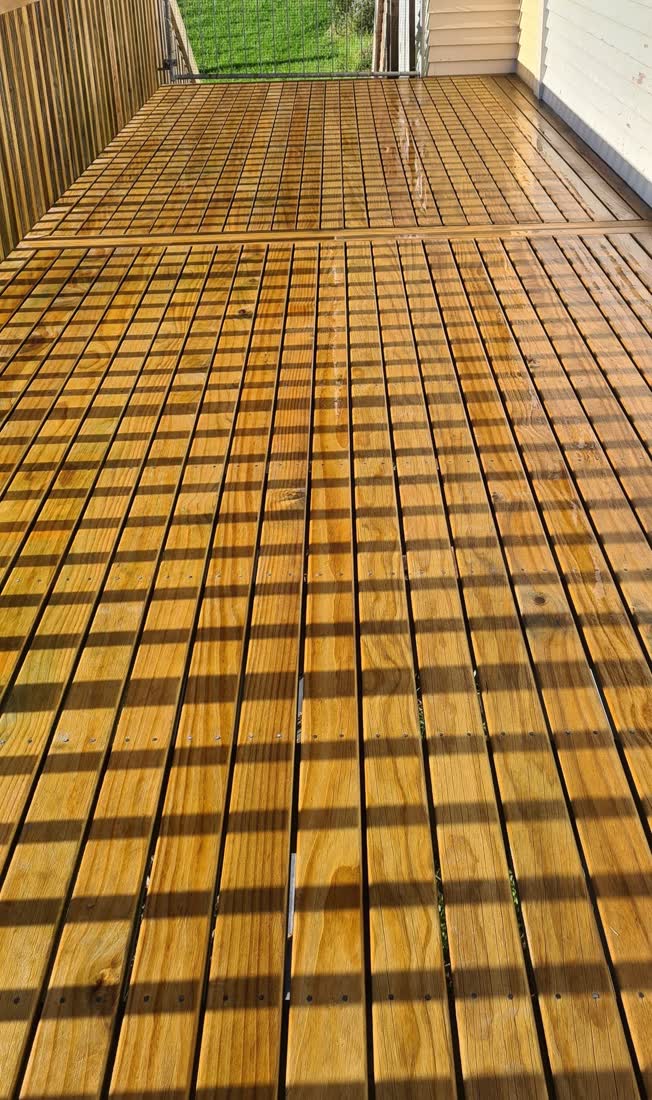
So which one do you need?
Use this simple guide:
- House, roof, painted surfaces, fences → soft washing
- Timber decks → gentle bleach-free timber wash (never high pressure)
- Green or black mould and algae → soft washing (it kills it, so it stays away longer)
- Concrete driveways, paths, pavers → water blasting, pre-treated and sealed so it stays clean longer
Most homes need a bit of both — a soft wash on the house and roof, and water blasting on the drive and paths. A good operator will use the right method for each surface rather than blasting the whole property.
Frequently asked questions
Is soft washing better than water blasting?
For anything on your house — roof, cladding, painted surfaces, fences — soft washing is better and safer, because it kills mould and algae at the root without the high pressure that can damage the surface. Water blasting is better for hard, tough surfaces like concrete driveways, paths and paving.
Will water blasting damage my roof?
It can. High-pressure water can lift or crack roof tiles, strip the protective granules off Decramastic and metal roofs, and force water under the surface. Roofs should be soft washed, not water blasted.
Can you water blast a house?
You can, but you shouldn't on most cladding. High pressure can force water behind weatherboards and cladding joints, strip paint and etch timber. A low-pressure soft wash cleans just as well without the risk.
Can you water blast a wooden deck?
No — and you shouldn't clean it with bleach (sodium hypochlorite) either. High pressure tears up the soft timber grain, and bleach dries out and greys the wood and raises the grain. Decks should be cleaned with a gentle, bleach-free timber wash that lifts the grime and restores the wood without damaging it.
Does soft washing kill mould permanently?
Soft washing kills the mould, moss and algae rather than just rinsing it off, so results last far longer than water blasting — typically a year or more. It will regrow eventually because spores are always in the air, which is why most Auckland homes are washed about once a year.
Is soft washing done with a pressure washer?
It can be — the same machine is simply dialled down to low pressure with a wider nozzle or a soft-wash setup. Soft washing is defined by the low pressure and the cleaning solution doing the work, not by using a different machine. It's the technique and the operator that matter.
Not sure which your place needs?
Tell us what you're looking at and we'll recommend the right method — soft wash, water blast, or both. Free, no-obligation quotes across greater Auckland.
Get a free quote